Context
In Eastern Africa, access to safely managed water is a major issue, especially in cases of emergencies such as internal and external influxes of people due to acute and chronic crises such as war, climate change and economic collapse.
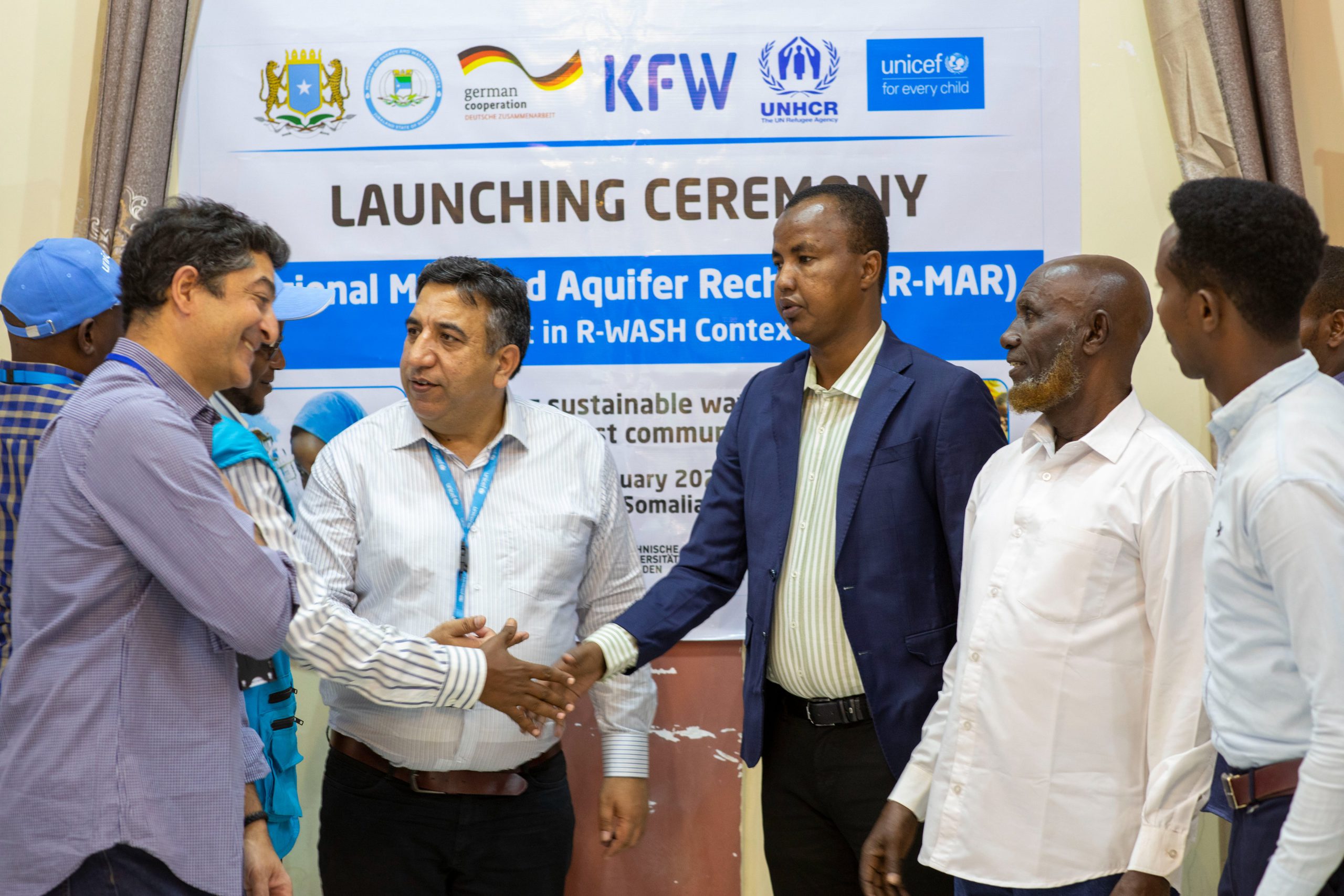
To address this, UNICEF and UNHCR in cooperation with KfW Development Bank have developed a Regional Water and Sanitation Programme for Refugees, Internally Displaced Persons, and Host Communities in East Africa (R-WASH). The programme invests in sustainable, cost-effective and climate-resilient water and sanitation systems, as well as supports the establishment of efficient, local water utilities ensuring long-term sustainability and promoting social cohesion.
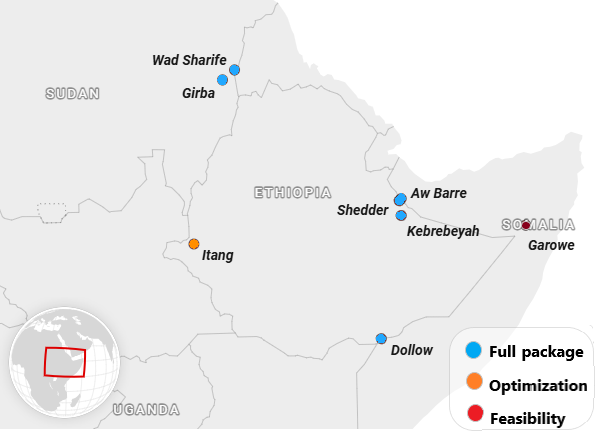
One of the selected R-WASH sites is Dollow, Somalia, where UNICEF and its partners assess the feasibility of managed aquifer recharge as measure to enhance the resilience and seasonal security of existing water supply systems.
Objectives
The main objective of the R-MAR project is to explore, evaluate and adopt potential solutions to mitigate against water insecurity under the climatic, social and economic conditions in Dollow, Somalia, by enhancing infiltration of surface water through managed aquifer recharge (MAR). The implementation of MAR should help to reduce water scarcity and drought vulnerability, as well as improve food security under various geographic, climatic and economic conditions, and also contributing to disaster risk reduction.
Work plan
Step 1. Water availability assessment
Qualitative and quantitative assessment of water sources
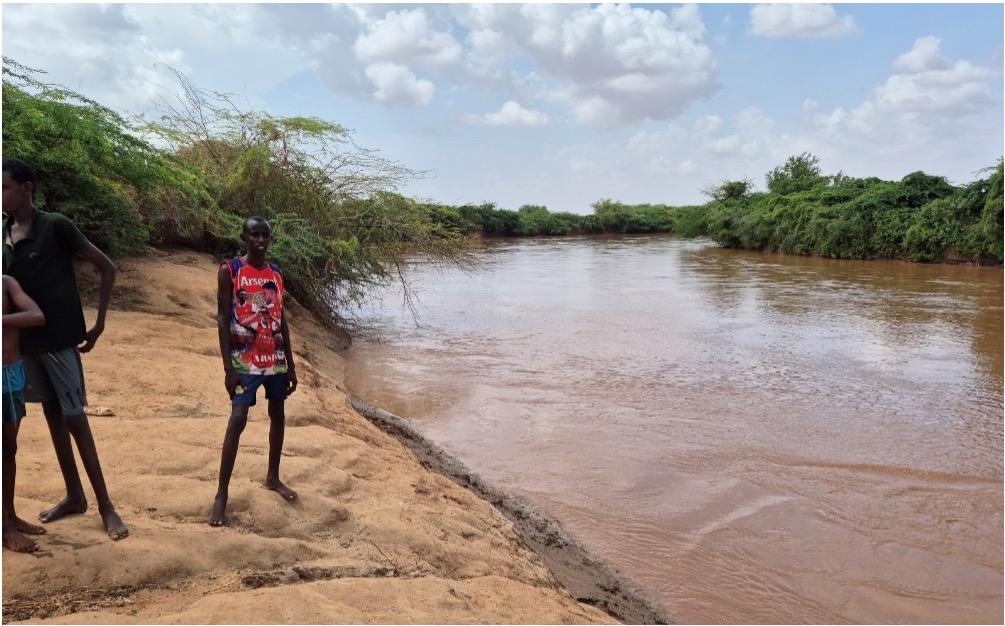
The water availability for MAR will be assessed by ERIMOS Ltd. using a regional hydrological model (CUWALID). This model developed at Cardiff University incorporates the impact of climate on the water balance and operates at high spatial and temporal resolutions. It can generate detailed or generalised output in the vicinity of Dollow, including within and around the Dawa and Jubba rivers.
Step 2. Site suitability mapping
Mapping the hydrogeological units within the river floodplain
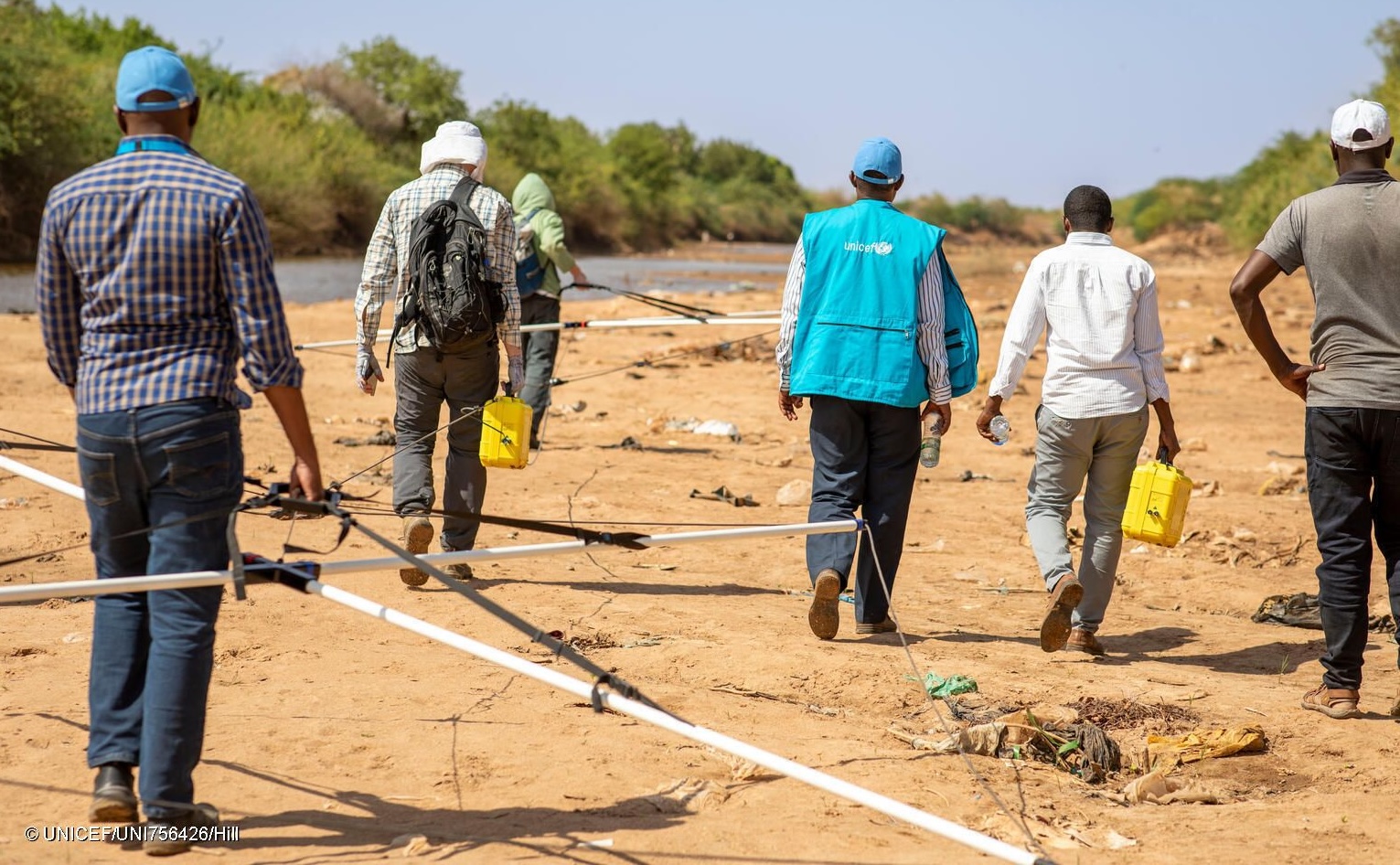
The Hydrogeophysics group at Aarhus University will conduct a transient electromagnetic survey in Dollow, Somalia to map alluvial sediment thickness and distribution. The survey will use the sTEM profiler to collect data within the floodplain adjacent to the Dawa and Jubba rivers, supporting the development of hydrological models for managed aquifer recharge designs.

Step 3. Site characterisation
Local hydrogeological site characterisation and monitoring
A comprehensive characterisation of the hydraulic properties of the underlying aquifer at selected sites will be conducted employing pumping tests conducted in both existing and newly constructed boreholes, infiltration tests, water quality assessments, and other relevant techniques. The spatial and temporal variability of groundwater levels will be quantified through a dedicated monitoring program developed by TU Dresden.
Step 4. Groundwater modeling
Model-based scenario analysis for co-design of MAR structures
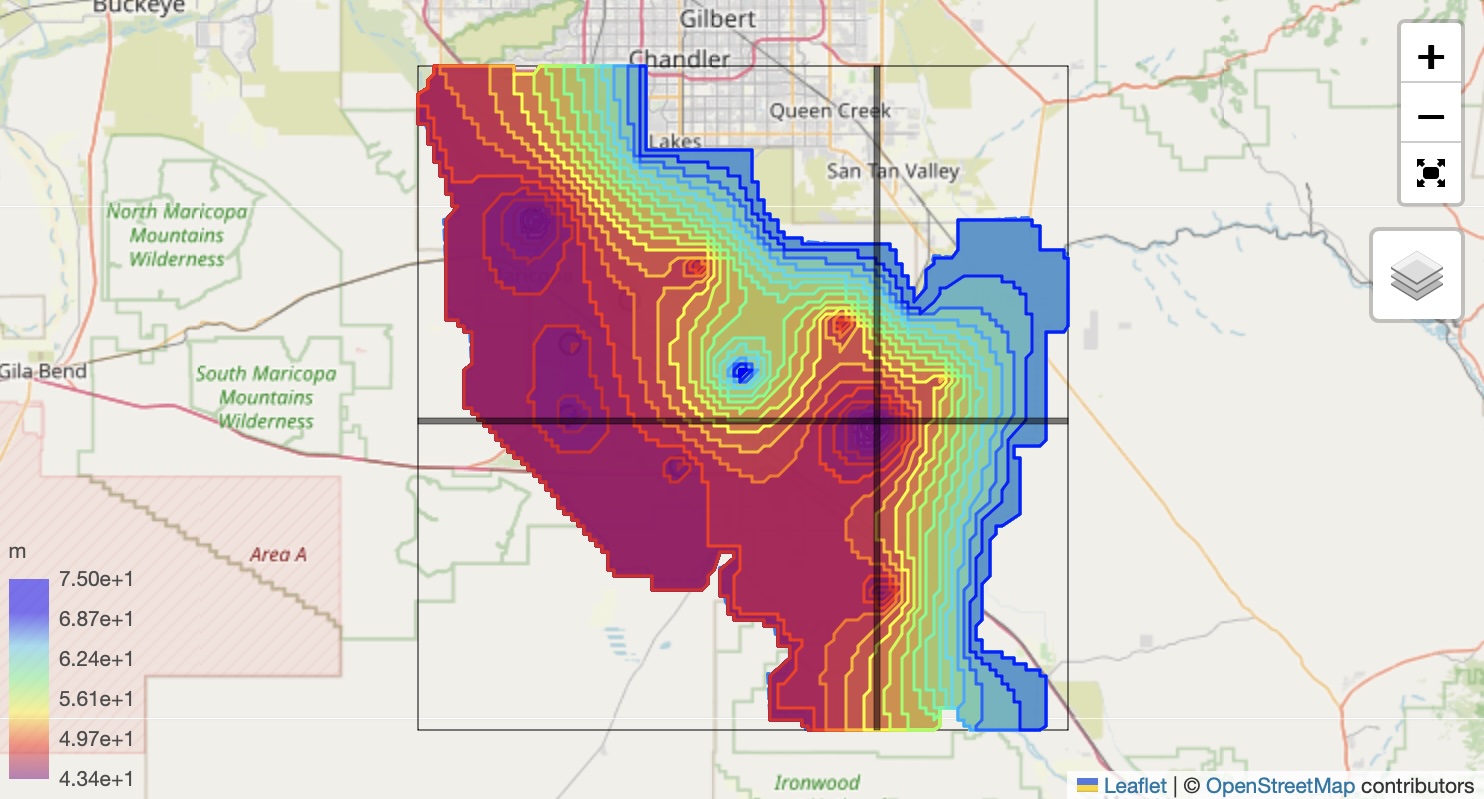
Groundwater flow models developed by the Research Group INOWAS at TU Dresden using a free, web-based modelling platform, will offer insights into how different recharge scenarios can impact the aquifer’s capacity and sustainability. Scenarios analysis conducted by TUD, UNICEF and local stakeholders will help to evaluate various anthropogenic and climatic conditions, such as changes in recharge rates and location, climate variations, or increased demand.
Step 5. Capacity development
Capacity development, training and stakeholders engagement
The project will develop training activities to build technical competences in managed aquifer recharge, targeting local water utility representatives and UNICEF staff members. The training will include courses on MAR planning and management, groundwater investigations, soil and aquifer characterisation, and water resources management, as well as workshops and consultations with key stakeholders. The training will be conducted by project partners with support from UNICEF and arche noVa.
Step 6. Construction and operation phase
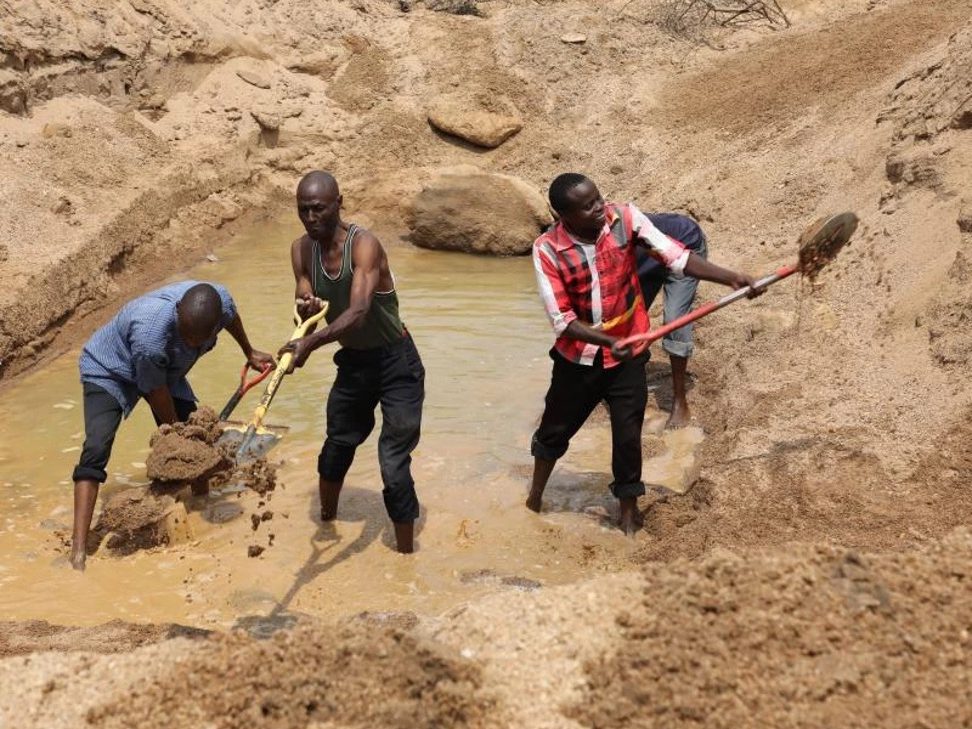
Implementation and operation of low-cost recharge structures
Low-cost, low-maintenance structures for managed aquifer recharge will be planned based by TU Dresden on the technical feasibility assessment and model-based based scenarios analysis. Upon completing an Environmental and Social Impact Analysis (UNICEF), proposed structures will be implemented under arche noVa’s supervision at suitable sites leveraging community involvement.